


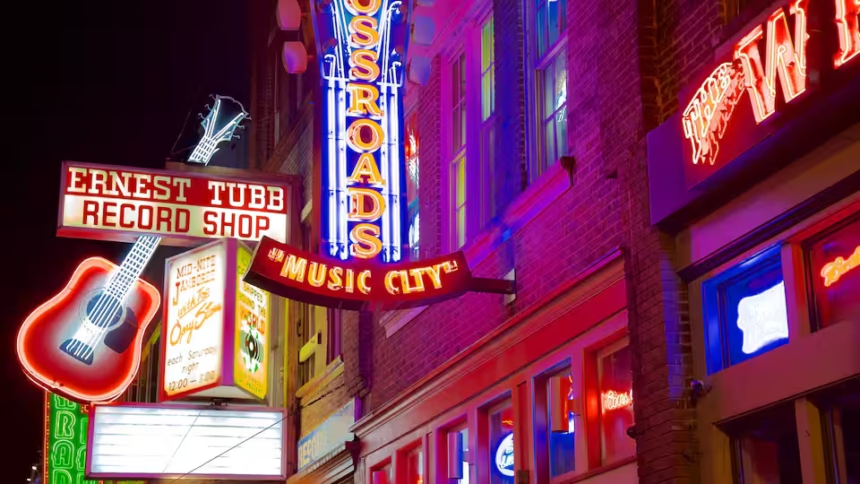
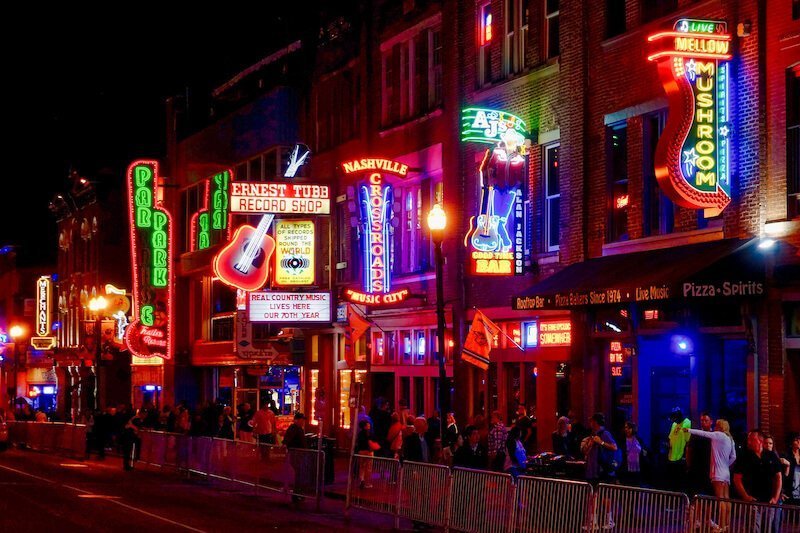
Nashville is the beating heart of American music — but behind the neon glow of Broadway and the tourist-packed honky-tonks lies a parallel city that most visitors never see. This is where the real Nashville lives: where platinum-selling artists grab breakfast, where the songs you know were actually written, and where legends quietly built their empires.
Why Nashville Is Unlike Any Other Music City
Memphis has Beale Street. Austin has Sixth Street. But Nashville has something neither city can claim: it is simultaneously a tourist destination and a fully functioning music industry town. On any given Tuesday, the person sitting next to you at a coffee shop on 12th Avenue South might have three Grammys at home and a co-writing session at RCA Studio A in an hour.
That duality — the show and the substance — is what makes Nashville endlessly fascinating. And once you know where to look, the city opens up in ways no tour bus will ever show you.
Where Country Stars Actually Live: Nashville’s Celebrity Neighborhoods
Green Hills & Forest Hills
If you drew a circle around the zip code where the highest concentration of country music wealth quietly resides, it would land squarely on Green Hills and the adjacent Forest Hills neighborhood. This is old Nashville money mixed with new music industry money — sprawling estate homes set well back from the road, deliberately anonymous.
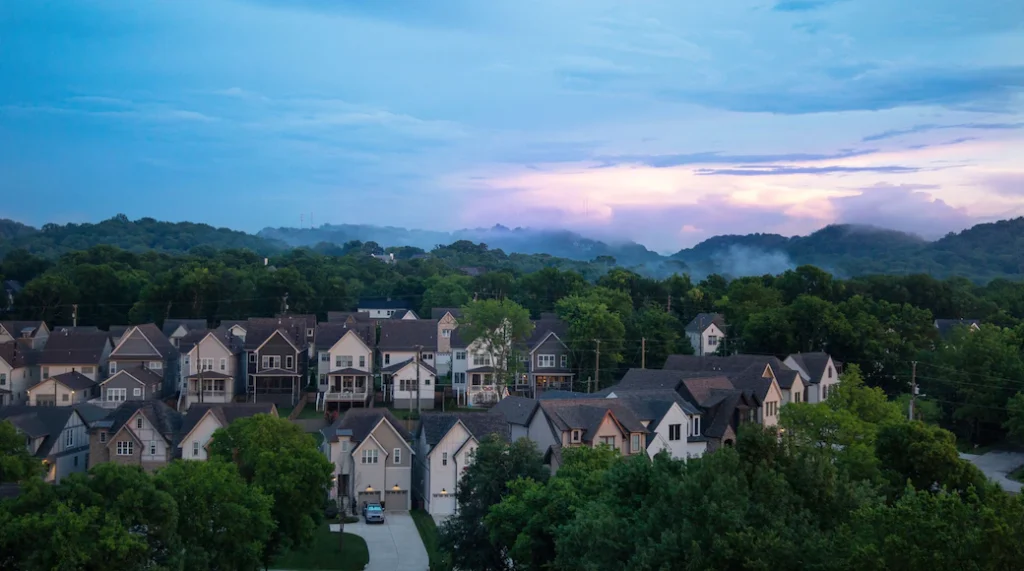
Green Hills is close enough to downtown to be convenient but far enough to feel like a private enclave. The streets are curving and tree-lined, the driveways long, and the gates tasteful rather than ostentatious. Residents value discretion above all else. Neighbors tend to know each other — and tend to leave each other alone.
What draws stars here: Top-rated schools, proximity to the major label offices clustered along Music Row, and a neighborhood culture that doesn’t treat fame as a spectator sport.
Brentwood
Just south of Nashville proper, Brentwood is where you go when you’ve sold enough records to want a horse property. The city has consistently ranked among the wealthiest small cities in America, and its sprawling estates — many with private gates, guest houses, and recording-ready studios tucked into barns — make it a natural landing spot for artists who want space and privacy.
The Tennessee Titans and Nashville Predators alumni have also made Brentwood home, which means the local restaurants and coffee shops have a quietly star-studded atmosphere without anyone making a fuss about it.
Insider tip: The Brentwood Whole Foods and the Cool Springs Galleria area are genuinely good spots to catch a glimpse of someone you’d recognize — though locals will absolutely clock you if you pull out your phone.
Belle Meade
One of the most prestigious addresses in Tennessee, Belle Meade sits just west of downtown and carries the DNA of Nashville’s oldest money. Think columned houses, immaculate lawns, and a neighborhood association that has strong opinions about everything. In recent decades, music industry executives and established artists have bought into this market precisely because it signals arrival — not flash.
12 South & Waverly-Belmont
Younger artists, producers, and the creative class orbiting the music industry have increasingly claimed the walkable, hip neighborhoods of 12 South and Waverly-Belmont. These are the neighborhoods where a mid-tier artist who just got their first sync license might buy a craftsman bungalow and walk to brunch. The energy is more Brooklyn than country estate — vintage shops, farm-to-table restaurants, and a dog-walking culture that feels entirely removed from Broadway.
Where the Songs Get Written: Nashville’s Real Recording Studios
Most tourists walk past these buildings without knowing what happened inside them. The studios below aren’t just historic — many are still actively in use.
RCA Studio B (Music Row)
This is ground zero. Opened in 1957, Studio B is where Elvis Presley, Dolly Parton, Roy Orbison, and hundreds of others recorded some of the most enduring American music ever made. More than 1,000 chart-topping records were tracked here. The Country Music Hall of Fame now operates tours, making this one of the few legendary studios you can actually walk into.
What the tour doesn’t always emphasize: the room still sounds the way it does because of the specific angles of the walls, the wood used in construction, and the absence of acoustic “correction” that modern studios often employ. Engineers call it “the Nashville Sound,” and it literally begins in this room.
Visit: Tours are ticketed through the Country Music Hall of Fame and Museum, just a short walk away on Demonbreun Street.
Ocean Way Nashville (17th Avenue South)
If RCA Studio B is the historic heart, Ocean Way is the current crown jewel. Housed in a former church on 17th Avenue South — a building that provides natural reverb that engineers quietly obsess over — Ocean Way has hosted sessions for virtually every major act working in Nashville today. The sanctuary-turned-live-room can hold a full orchestra, which is why it’s become the go-to for artists wanting lush, orchestrated arrangements.
You won’t be able to go inside, but the building itself is worth seeing. The stained glass windows are still there.
Blackbird Studio
Located on Music Row, Blackbird is the modern workhorse — a multi-room complex that handles everything from quick overdub sessions to full album productions. Founded by producer John McBride, it was built with obsessive attention to technical detail and has become the kind of place where a session booked for three hours can quietly turn into three days when a song starts working.
Historic RCA Studio A
Distinct from Studio B, Studio A is the larger of the two original RCA facilities on Music Row. It was nearly demolished in 2015 before a community campaign led by artists including Ben Folds and Vince Gill saved it. Today it operates as a working studio and is occasionally open for tours during special events. The fight to save it became a turning point in how Nashville thinks about its own musical heritage.
Where Stars Actually Eat: The Non-Tourist Nashville Food Scene
Broadway has its bar food and its bachelorette-party menus. These places operate on a different frequency entirely.
Catbird Seat
Consistently regarded as one of the best restaurants in America, Catbird Seat is a tiny, chef’s-counter experience in the Gulch neighborhood where the menu changes entirely based on what the kitchen wants to cook. There are roughly 22 seats. Reservations open 30 days out and disappear within hours. It is the restaurant Nashville insiders name when they’re trying to impress someone, and it bears absolutely no relationship to the tourist dining corridor on Broadway.
The insider move: Set a calendar reminder for exactly 30 days before any date you want to visit and refresh at the reservation opening time.
Husk Nashville
Chef Sean Brock’s commitment to Southern heirloom ingredients — some grown specifically for the restaurant — turned the Husk brand into a national conversation about what Southern food actually is. The Nashville location, set in a Victorian house in Rutledge Hill, draws a crowd that skews heavily toward industry people who want a serious meal without spectacle. The bourbon list is treated with the same reverence as the food.
Henrietta Red
Opened by chef Julia Sullivan, Henrietta Red has become the neighborhood anchor for the Germantown dining scene and the kind of restaurant that locals recommend without hesitation when someone asks where to actually eat. The oyster bar is exceptional by any standard, and the kitchen’s treatment of vegetables is sophisticated enough to make vegetarians forget they’re at a restaurant that also serves excellent fish.
The Farm House
Tucked into the Rutledge Hill neighborhood, The Farm House has long been a quiet industry dinner spot — the kind of place where a label executive might be having a conversation at the next table that determines the career arc of an artist you’ll be hearing about in six months. The menu is locally sourced and changes seasonally. The vibe is low-key enough that people let their guard down.
Biscuit Love (Gulch & Hillsboro Village)
The line is real and it’s worth it. Biscuit Love has become the definitive Nashville breakfast spot in a way that transcends hype — the bonuts (biscuit donuts) have been written about in publications that don’t normally cover biscuits. Both locations draw a mix of tourists who read the right things and locals who’ve decided the occasional wait is simply the price of the best biscuit in Tennessee.
The Honky-Tonks They Actually Go To
Lower Broadway’s “Honky-Tonk Highway” is real and worth doing — but it’s a tourist experience by design. The bars where Nashville’s music community actually goes to hear music tell a different story.
The Bluebird Cafe
Every serious songwriter in Nashville has played the Bluebird. This unassuming strip-mall venue in Green Hills is one of the most important listening rooms in American music — the place where Taylor Swift was discovered, where countless careers began, and where the custom is to be absolutely quiet during performances. The room seats about 90 people. The performers sit in the round. It is the opposite of a Broadway honky-tonk in every way, and it is sacred to Nashville’s music community.
Getting in: Reservations open online, and shows sell out fast. Walk-up lines form well before doors, and there are no guarantees. Plan ahead.
Station Inn
Bluegrass has a permanent home in the Gulch at the Station Inn, a venue that has operated since 1974 and refuses to be anything other than exactly what it is: a room where bluegrass musicians play for people who love bluegrass. The sight lines aren’t great. The stage is small. The drinks are basic. The music, on the right night, is transcendent.
3rd and Lindsley
This is Nashville’s mid-tier live music venue in the best possible sense — big enough to host acts with a real following, small enough that you’re never far from the stage, and booking-smart enough to catch artists either on the way up or in the comfortable prime of long careers. It’s a genuine music venue, not a bar with entertainment, and that distinction matters.
The 5 Spot
East Nashville’s heart beats at the 5 Spot, a neighborhood bar that has hosted a legendary Monday night soul revue (Motown Monday) for years alongside a weekly dance party that’s been running long enough to become a Nashville institution. The crowd is young, the energy is genuine, and the prices haven’t tried to reflect the neighborhood’s gentrification. Yet.
Music Row: The Industry’s Beating Heart
What Music Row Actually Is
Running along 16th and 17th Avenues South, Music Row is a roughly 10-block stretch that contains a higher concentration of recording studios, music publishing houses, management companies, talent agencies, and music industry offices than anywhere else in the world. It looks, to the uninitiated, like a slightly upscale residential neighborhood where some of the houses have been converted to offices. What it actually is: the engine room of a multi-billion dollar industry.
The Walk of Fame Park
Just off Music Row, the Music City Walk of Fame honors Nashville’s most significant contributors to American music — a more serious and considered list than it might first appear. The medallions embedded in the sidewalk include not just country artists but jazz musicians, rock icons, and producers who built careers here. It’s a quiet, un-touristy spot to spend 20 minutes.
The NSAI (Nashville Songwriters Association International)
One institution that defines Nashville’s identity as a songwriter’s city is NSAI, which runs workshops, advocacy programs, and events that the broader public rarely sees. Nashville’s culture of collaborative songwriting — where a hit might be written by three people who came together specifically to write songs — is institutionalized here in a way that doesn’t exist in any other music city in the world.
East Nashville: The Creative Counterculture
If you want to understand what Nashville is becoming — rather than what it’s always been — spend a day in East Nashville. The neighborhoods of Lockeland Springs, Edgefield, and Five Points have attracted the artists, producers, and musicians who wanted to be close to the industry without being absorbed by it.
East Nashville has its own restaurant scene (Butcher & Bee, Mas Tacos Por Favor, Mitchell Delicatessen), its own bar culture (Rosemary & Beauty Bar, Dino’s), and its own identity that feels genuinely separate from the country music industrial complex just across the river. Many of Nashville’s most interesting newer artists live here, and the neighborhood’s increasingly high property values are a source of both pride and anxiety for longtime residents.
Don’t miss: The Five Points intersection area on a warm weekend evening, when the neighborhood’s density of bars, restaurants, and people-watching opportunities reaches a kind of critical mass that feels like no other part of the city.
Practical Tips for Seeing the Real Nashville
When to go: The city is genuinely beautiful in October, when the heat breaks and the trees along the residential streets turn. Summer is busy and hot. CMA Fest in June transforms the city into something else entirely — extraordinary if you want the full spectacle, overwhelming if you don’t.
How to move: Nashville’s walkability is concentrated in specific neighborhoods. Get a car or use rideshare to move between East Nashville, the Gulch, 12 South, and Music Row — trying to walk the full circuit will exhaust you before you see the best of it.
What not to do: Don’t spend your entire trip on Lower Broadway. See it once, have a drink, absorb the atmosphere. Then go find the city that exists when the neon fades.
One thing to spend money on: A ticketed tour of RCA Studio B. It’s not expensive, it’s genuinely fascinating, and standing in the room where “In the Ghetto” and “Make the World Go Away” were recorded is an experience that won’t feel like tourism.
The Nashville Nobody Talks About
The city’s identity is bound up in its music, but Nashville is also a complex, changing place navigating rapid growth, a housing market that has become genuinely difficult for working musicians, and the tension between being a destination city and being a place where people actually live and build careers.
The best version of a Nashville visit honors that complexity. It means eating at restaurants that support local farms, tipping musicians who are playing for the love of it, and treating the city’s creative infrastructure — its studios, its listening rooms, its songwriter circles — with the respect it deserves.
Nashville gave American music its backbone. The least we can do is pay attention when we visit.