



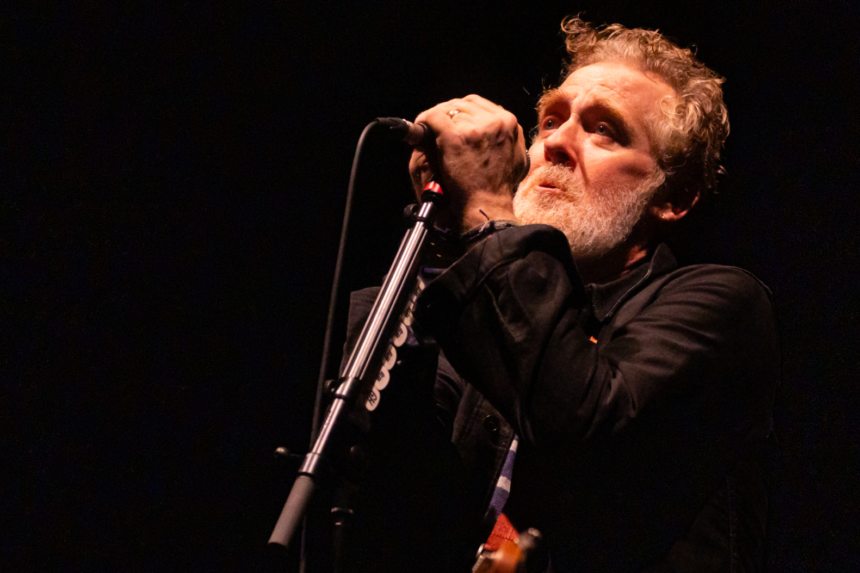
Glen Hansard spent Tuesday night the way he’d spent countless Tuesday nights before: tucked into a corner of the Wren’s Nest pub in Lucan, guitar in hand, trading songs with the local trad musicians who knew him not as an Oscar winner but as a regular. Hours later, riding home along a quiet stretch of Lower Road just before 4:30 a.m., the 56-year-old musician was killed in a single-vehicle motorcycle crash. By Wednesday afternoon, tributes were pouring in from across the music world for a man who never quite stopped being a busker at heart, even after Hollywood came calling.
Irish police said the rider, a man in his 50s, was treated at the scene but pronounced dead shortly after. Gardaí have not officially named him, but Hansard’s management confirmed the loss in a statement that captured the shock rippling through Dublin’s music community. “With broken hearts we announce the passing of Glen Hansard,” the statement read, asking that the privacy of his family and friends be respected during an “extremely difficult” time.
For anyone who came of age on Dublin’s streets in the early ’90s, Hansard’s story was already the stuff of local legend. Born in the city in 1970, he started out busking on Grafton Street before forming the rock band The Frames in 1990, a project that would anchor his career for over three decades and produce six studio albums, the last being 2006’s The Cost. He crossed into film that same era too, landing a role as Outspan Foster in 1991’s The Commitments, playing a scrappy member of a fictional Dublin soul band in a movie that’s since become a cult classic.
It was 2007, though, that changed everything. Hansard starred opposite Czech-Icelandic singer-songwriter Markéta Irglová in Once, a low-budget indie shot largely on handheld cameras, about a street musician and an immigrant piano player who fall for each other through music. The film’s breakout song, which the pair wrote together, went on to win the Academy Award for Best Original Song at the 2008 ceremony, turning two relative unknowns into international names overnight. The story didn’t end at the Oscars stage, either. Once was later adapted into a Broadway musical that swept eight Tony Awards, including Best Musical, cementing the small film’s outsized cultural footprint.
Hansard and Irglová’s real-life romance, which had unfolded quietly alongside the film’s production, ended in 2009, but their musical partnership outlasted the relationship. As The Swell Season, the duo released three albums between 2006 and 2026, including last year’s Forward, their first record together in sixteen years. Hansard later married Finnish poet Maire Saaritsa, and the couple had a young son, Christy.
The outpouring since the news broke has spanned generations of musicians. Bruce Springsteen called him a friend, writing that he was heartbroken over the loss of a man he described in part as “generous and gracious.” Irish Taoiseach Micheál Martin said Hansard had made a lasting mark on the country’s cultural life, while President Catherine Connolly praised his gift for bringing people together through live music. U2’s Bono and Wilco guitarist Nels Cline were among the other artists who paid public tribute, alongside younger stars who grew up on his music, including Rachel Zegler.
That cross-generational reach wasn’t accidental. Billie Eilish once covered Irglová’s Once ballad “The Hill” during a live set, a small but telling sign of how deeply the film’s music had embedded itself in pop culture well outside Ireland’s borders. Hansard also kept close ties to Dublin’s older folk traditions; in 2023, he joined singer Lisa O’Neill to perform at the funeral of Pogues frontman Shane MacGowan, a moment fans still talk about for how it turned a somber church service into an impromptu singalong.
Solo work rounded out a catalog that never stopped growing. Rhythm and Repose arrived in 2012, followed in 2015 by Didn’t He Ramble, which earned a Grammy nomination for Best Folk Album. He was a frequent presence on television performance segments over the years and, for over a decade, led an annual Christmas Eve charity busk on Dublin’s streets, a tradition rooted in the very habit that first put him in front of an audience.
Hansard’s approach to performing stayed remarkably consistent throughout his career. In a recent interview, he described chasing a kind of live-wire unpredictability on stage, saying he’d sometimes switch songs mid-set just to keep himself and the crowd fully locked in. It’s a fitting note to leave on: a musician who, even decades into his career, was still chasing that same electric connection he first found busking on Dublin’s streets as a teenager.
He is survived by his wife, Maire Saaritsa, and their son, Christy.