





Samuel drops a four-track debut that fuses reggaeton, Latin heat, and K-pop precision — and it might be the most quietly ambitious genre experiment of 2026.
He was born in Los Angeles, raised in Seoul, trained alongside the future members of SEVENTEEN, and named after a childhood nickname his family still uses. If you were designing a pop star engineered to exist in 2026’s fractured, globalized music market, you might draw something like Samuel.
The artist released Samuelito — a four-track mini-album — this week, and the timing is not accidental. The K-pop industry has spent years pushing its borders outward, co-opting hip-hop, R&B, and hyperpop aesthetics with assembly-line precision. Latin music, meanwhile, has been the defining force in global pop for nearly a decade running, with reggaeton’s percussion patterns now embedded in songs from Seoul to São Paulo. What Samuel is attempting, with a notably small canvas, is the convergence of both.
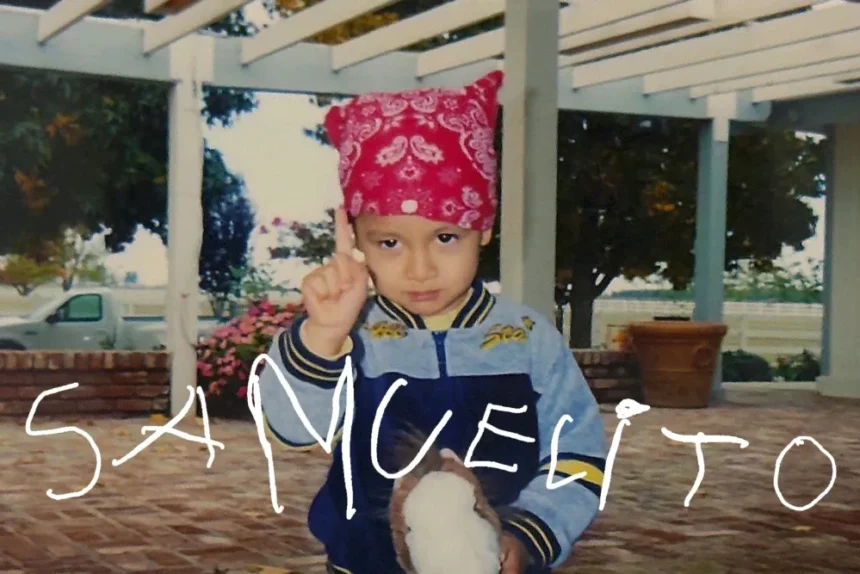
The album’s title comes from a childhood nickname, and that framing matters. Samuelito is pitched as autobiography more than showcase — a return, Samuel has said, to a more authentic version of himself after years of building a career inside the K-pop industry’s demanding performance culture. He spent formative years under Pledis Entertainment before going independent, accumulating a following that now runs north of two million on Instagram.
The four tracks — Hola!, Zigi-Zigi-Zigi, Never Say Goodbye…, and Ddook Ddak — are sequenced with an intentionality rare for a four-song project.
The EP moves from declaration to rhythmic momentum, then pulls back into something more introspective before resolving with energy. The lead single Zigi-Zigi-Zigi arrives with a music video and carries the most obvious commercial intent: bright production, sharply choreographed visuals, and a hook designed to translate across markets simultaneously.
What makes the album worth paying attention to isn’t just the fusion concept — plenty of artists have tried Latin-K-pop crossovers and produced something that sounds like a focus group experiment. What Samuel brings is the lived experience of actually inhabiting both worlds. His father was Mexican-American, his mother Korean. He trained in Korea as a child. He grew up hearing Spanish at home and performing in Korean on stage. The hybrid sound on Samuelito doesn’t feel like a strategic business decision. It feels like someone finally letting the private parts of their identity show up at work.
The K-pop industry has historically been suspicious of artists who step outside the group structure, and Samuel’s solo career has had its share of industry turbulence. He navigated contract disputes and management complications before establishing independent footing. That background gives Samuelito a certain earned quality — this isn’t a calculated reinvention. It’s a reclamation.
Whether the four-track format limits its commercial reach or sharpens its artistic focus is a debate worth having. In an era when full albums feel like obligations and singles feel like currency, there’s something genuinely countercultural about releasing a compact, sequenced statement. Samuel is betting that audiences with two million Instagram followers will follow the music wherever it goes.
Probably a good bet.