



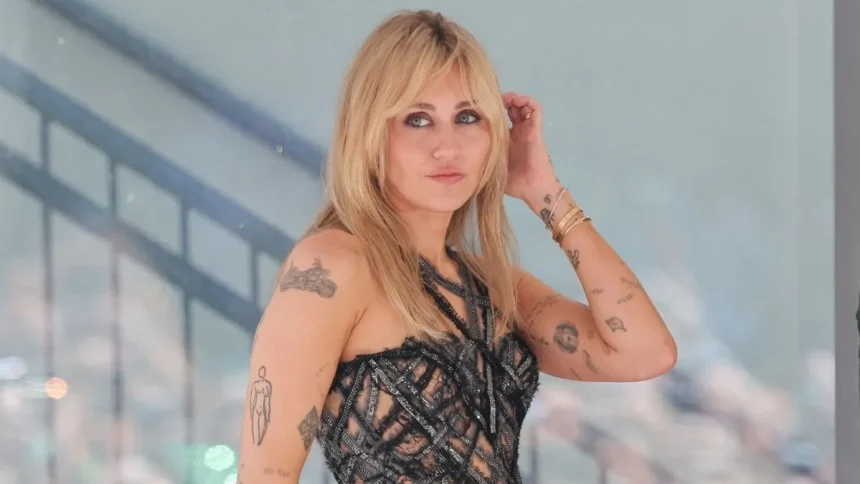
Mattel folds the “Hannah Montana” star into its Signature Series, and the woman who spent two decades being remade by other people’s imaginations finally gets to design the version that’s actually hers.
There’s a particular kind of vertigo that comes from watching someone hand you a plastic version of yourself.
Miley Cyrus knows that vertigo better than almost anyone in Hollywood. She spent her adolescence as a Disney product — a wig, a costume, a brand built around a girl who wasn’t fully allowed to grow up on camera. So when Mattel handed her a box on Tuesday and she pulled out a doll with her own face on it, dressed the way she chose, styled with the details she insisted on, it wasn’t just a toy unveiling. It was, in her own words, coming full circle.
“Seeing my Barbie for the first time is a dream come true,” Cyrus said in the statement Mattel put out alongside the reveal. Then she got specific, the way people do when something has actually mattered to them and isn’t just a press-release nicety: “We did not miss any marks in the design of my doll, from the look, hair, accessories, makeup, and structure. Every detail was purposeful, and we spent a lot of time perfecting her — not to be perfect, because that wouldn’t be representative of me.”
That last line is doing a lot of work. Anyone who has followed Cyrus since the Hannah Montana wig came off knows exactly what she’s pushing back against.
The Doll, the Details, the Deal
The Barbie Signature Miley Cyrus Collectible Doll dropped Tuesday, June 30, dressed in the black faux-leather two-piece from her “Golden Burning Sun” music video — the single off last year’s Something Beautiful album. Bralette, narrow-leg pants, a belted jacket with an oversized hood, pointed-toe pumps, sunglasses, a tiny microphone. Fully articulated, so collectors can actually pose her rather than leave her frozen in a box, which matters more to this particular fan base than outsiders might guess.
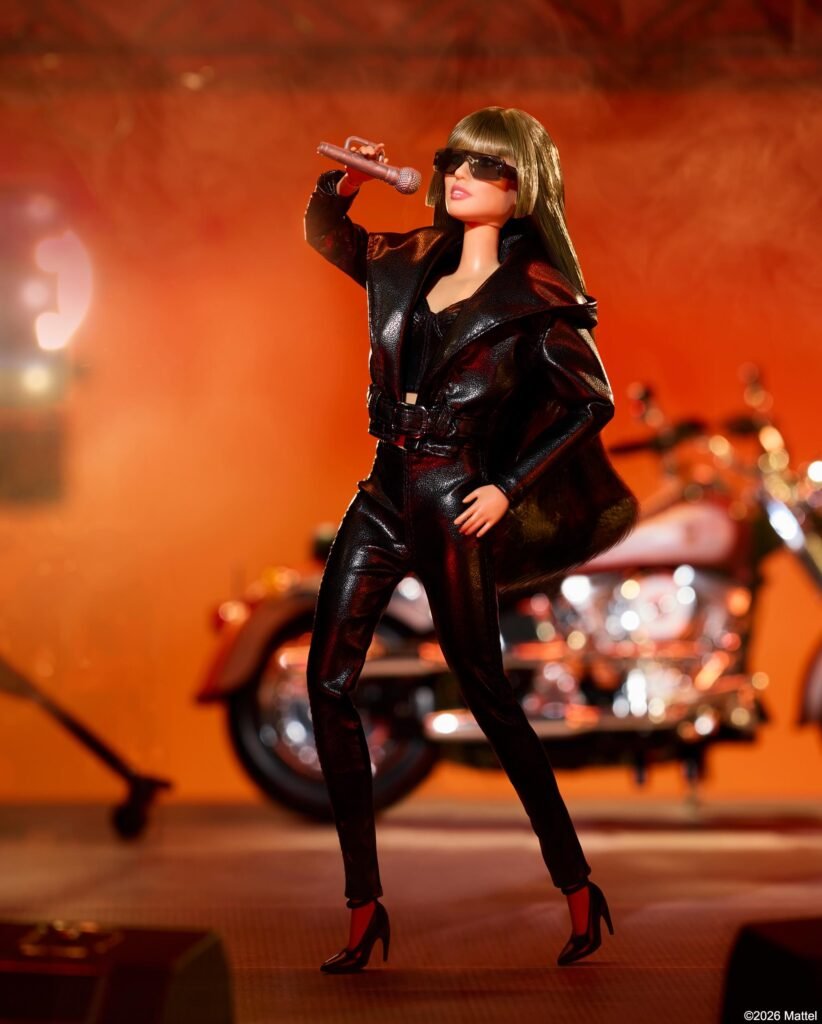
Mattel gated the first 24 hours to Barbie Club 59 members through its Creations site before opening it up to Amazon, Walmart and Target at $60 a doll. It sold briskly enough that by Tuesday night, fans on social media were already trading notes on restock timing.
Nathan Baynard, Mattel’s Vice President and Head of Barbie, framed the pick in the language the brand reaches for whenever it inducts someone into the Signature line: “Barbie is dedicated to celebrating trailblazing women who break boundaries and inspire the next generation, and Miley Cyrus lives up to that mission.” Corporate boilerplate, sure — but not wrong. Mattel’s own materials traced the arc it was buying into: child actor to vocal superstar, a catalog that runs from Hannah Montana through Bangerz through Plastic Hearts to a Grammy-winning Something Beautiful era, capped this year by a star on the Hollywood Walk of Fame.
Why the Timing Isn’t an Accident
Cyrus getting immortalized in plastic barely a season after getting immortalized in concrete on Hollywood Boulevard isn’t a coincidence — it’s a rollout. Labels, studios and licensing arms have gotten increasingly disciplined about stacking legacy moments back to back, letting each one goose the next in headlines and search traffic. A Walk of Fame star photographs beautifully. A Barbie unboxing performs beautifully on TikTok. Put them six weeks apart and you’ve built a mini-campaign without anyone having to call it one.
There’s also the matter of who Cyrus is joining. The Barbie Signature musician tier is small and curated by design — Stevie Nicks, Kylie Minogue, Mariah Carey, the late Aaliyah. It’s not a list Mattel hands out casually; every artist on it carries decades of cultural residue, not just chart numbers. Slotting Cyrus in alongside them is Mattel making a bet that her career has crossed from “pop star” into “cultural fixture” — the kind of distinction that’s genuinely hard to buy and even harder to fake.
The Part That Isn’t About the Doll
Cyrus has talked before, on other occasions, about actually collecting Barbies — she’s mentioned owning the Stevie Nicks and Kylie Minogue editions, and has described a room in her house dedicated to the collection. That’s the detail that turns this from routine merchandise into something a little more personal. This wasn’t a stranger’s brand asking to use her face. It was a fan, who happens to be famous enough to warrant her own doll, getting inducted into a collection she already loved.
“My doll collection is very important to me,” she’s said. “It’s not just the dolls themselves; it’s the representation of the powerful figures that my dolls are made out of.”
Fan reaction, predictably, split down the line between reverence and jokes — the internet’s two default settings for anything Miley-related. One commenter noted, only half-joking, that the doll captures what might be her least iconic look rather than an obvious hit like the “Wrecking Ball” era or the Bangerz tongue-out years. Another asked, bluntly, whether the doll came with her tattoos. A third, a self-described 34-year-old, admitted she’d be buying her first Barbie since childhood specifically for this. Somebody else floated the idea Mattel might eventually build out a whole Miley “eras” line — Hannah Montana, Bangerz, Plastic Hearts, Something Beautiful — the way pop merchandising increasingly treats an artist’s back catalog as a rotating product line rather than a finished story.
The Bigger Picture
None of this reads as accidental. Musician licensing has become one of the steadier corners of the toy business precisely because it doesn’t require Mattel to predict a hit — it requires them to identify someone whose fan base already behaves like a market. Cyrus, at 33, sits at an unusually clean intersection: Gen Z discovered her through Something Beautiful and Grammy wins, millennials grew up alongside Hannah Montana, and both cohorts have disposable income and an appetite for nostalgia-adjacent collectibles. That’s not a coincidence Mattel stumbled into; it’s the exact demographic math that makes a Signature doll pencil out.
Cyrus, for her part, seems to be treating the moment less as a marketing beat and more as a kind of reckoning with the girl she used to be sold as. “I never thought my Barbie could be that of a rockstar and a mogul,” she’s said elsewhere about the collection she grew up loving — the sentiment behind it now applying, finally, to a doll with her own name on the box.
She’s building the mythology on her own terms this time. Whether Mattel turns this into a full “eras” rollout — or whether this stays a one-off tribute — is the question fans are already asking. Cyrus hasn’t said. Neither has Mattel. For now, there’s just one doll, one look, and a woman who spent twenty years being someone else’s idea of herself finally holding the version she signed off on.